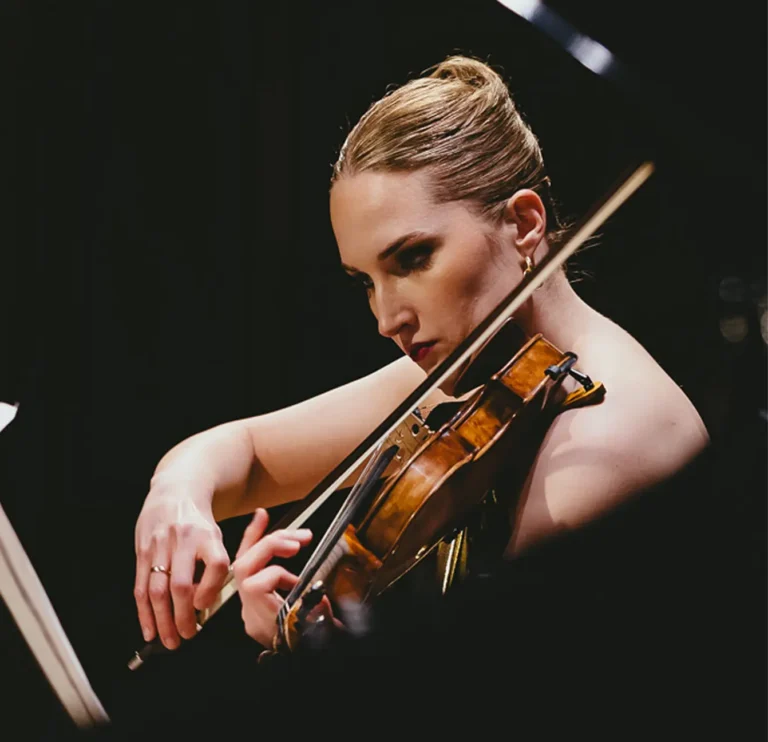
The Body Plays First (in Polish, Ciało gra pierwsze skrzypce) is a free educational project about body awareness, movement, ergonomics and injury prevention for violinists - a series of films and resources for students and professionals alike. Funded by the Polish Ministry of Culture, it grew from one idea: the body is a musician’s first instrument. Here’s where it came from, and why I wanted it to be free.
A few years ago, an injury took the violin out of my hands for months. In the silence that followed, a belief I’d carried for a long time finally broke: the idea, so common among musicians, that pain is simply part of the job. It isn’t. And once I understood that, I couldn’t unknow it - or keep it to myself.
That’s where this project comes from. Its name is The Body Plays First - in Polish, Ciało gra pierwsze skrzypce; in Swedish, Kroppen spelar först - and it’s the project that brings together the work I care about most.
What is The Body Plays First.
It’s an educational project about body awareness, movement, ergonomics and injury prevention in violin playing - a series of films and educational resources that put this knowledge in front of any violinist who wants it. It’s made for players at every stage: upper-secondary music students, conservatoire students, and professional musicians who have been carrying tension or pain for years without quite knowing why.
The project is supported by the Polish Ministry of Culture. That support matters to me for one specific reason: it meant I could make the material freely available, rather than turning hard-won knowledge into yet another thing a young player has to be able to afford.
Who I made it with.
I am a violinist and teacher, not a one-person authority on anatomy - and this subject is too important to improvise. That’s why I’m developing the project in consultation with specialists in Body Mapping, musicians’ physiotherapy, performance psychology and ergonomics. Their expertise help me review and challenge the material, ensuring that every recommendation is grounded in current knowledge as well as practical experience.
Together, the project explores how the body moves, how to recognise and prevent unnecessary tension, what to do when something hurts, and the psychological side of performing under pressure - because, as every performer knows, body and mind are part of the same conversation.
Why make it free.
Because the knowledge that prevents injury shouldn’t be a privilege. Most of what damages players over a lifetime isn’t dramatic - it’s small, repeated, and entirely preventable if someone shows you early enough. I learned that the hard way, off stage, with a violin I couldn’t pick up. If a series of films and exercises can spare even a few students that detour, it’s worth far more than what it costs to make.
There’s a principle underneath it that runs through everything I do, including my teaching: the body is a musician’s first instrument.
One idea runs through everything I do, both as a performer and a teacher: the body is a musician’s first instrument.
Before the sound, before the technique, there’s a body that has to be free. Take care of that, and everything else will have a stronger foundation.
What’s inside.
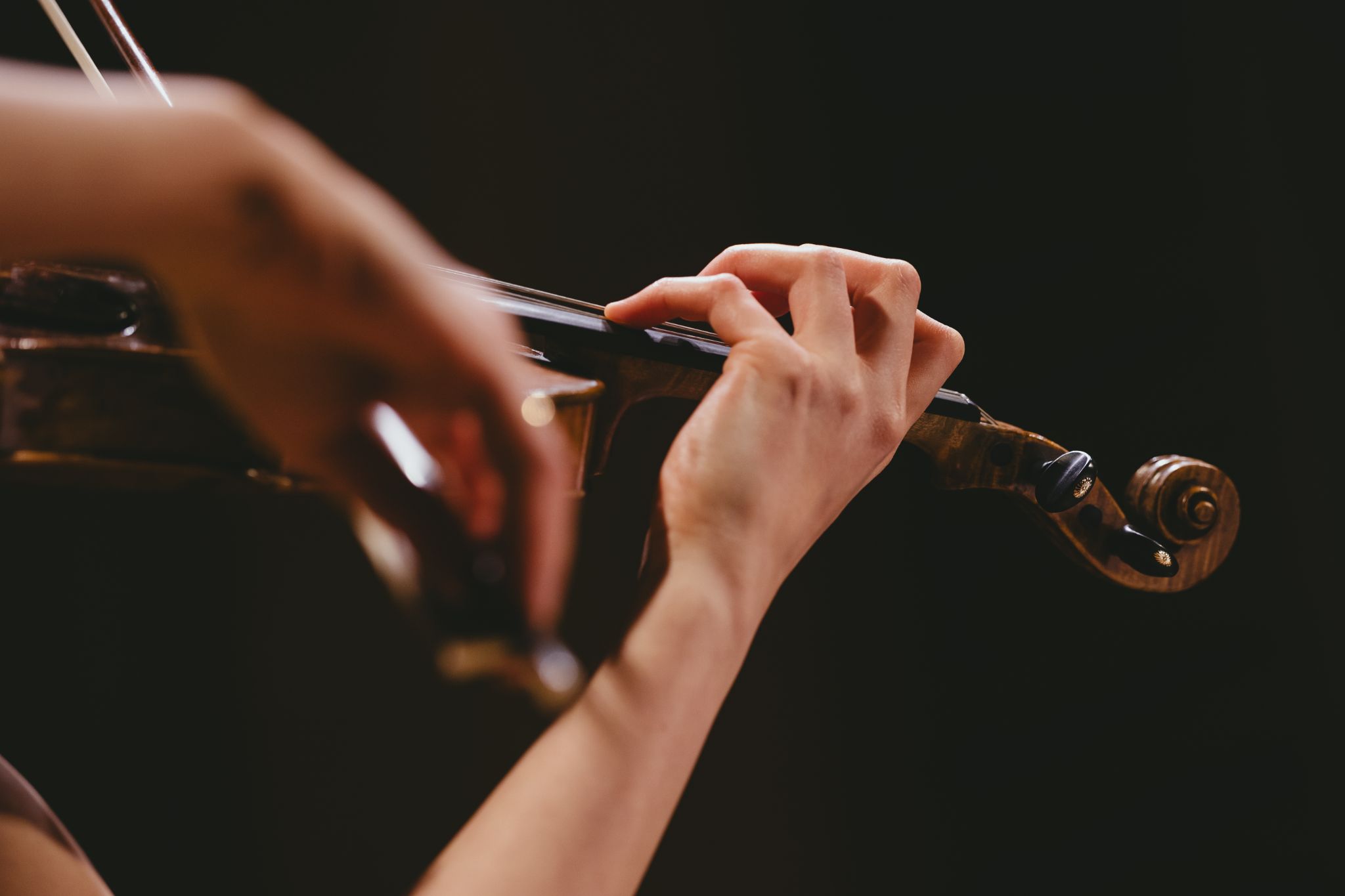
The material works through the same ideas I return to again and again with the violinists I teach - the reasoning behind a movement rather than a rule to obey, and the simple, freeing fact that pain is not part of the job. It pairs short films with exercises and guides you can actually use at the music stand, whether you’re a first-year student or a professional rebuilding a habit that no longer serves you.
My hope is modest and stubborn at the same time: that a player somewhere catches the first signal early, understands what their body is telling them, and keeps playing freely for decades longer than they otherwise might.
Questions I’m often asked.
What is The Body Plays First.
An educational project - films and resources - on body awareness, movement, ergonomics and injury prevention in violin playing, supported by the Polish Ministry of Culture. Its Polish title is Ciało gra pierwsze skrzypce.
Who is it for.
Violinists at every stage: upper-secondary and conservatoire students, and professional musicians - anyone who wants to play more freely and protect themselves from injury.
Is it free.
Yes. The Ministry of Culture’s support made it possible to offer the material freely, which was the whole point.
Work on this together.
I’m Agata Kawa-Cajler, a Polish-born violinist based in Sweden. The Body Plays First grew out of the same approach I bring to teaching - violin lessons rooted in body awareness, ergonomics and the Alexander Technique. You can explore the project, and if you’d like to work this way on your own playing, book a free intro call. No commitment - just a conversation.